Find what you're looking for

Showing posts with label Christianity. Show all posts

Wednesday, 4 February 2026

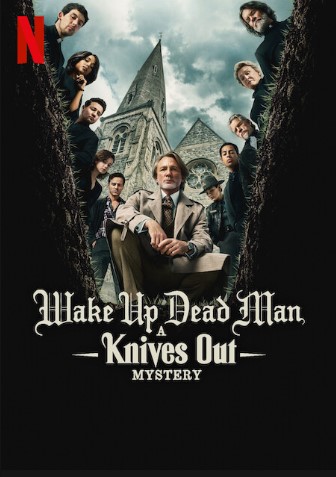
Wake Up, Dead People - the Knives are Out


 I'm back! First post of the year. Took me a while. Everyone and their dog has probably seen Wake Up, Dead Man: A Knives Out Mystery by now, but if you haven't, this post is going to be at least in part a review of that movie. While I won't be going into spoilers as such as part of this post (or that's the intent, anyway), if you'd prefer to go in blind, I guess find something else to read? Ths short version is: it's very good, and you should watch it. Anyway. I do say in part only, though, because part of why I wanted to write this is actually more of a reflection than a review. So we'll see how that goes.

Wake Up, Dead Man is now the third instalment in the Knives Out - what do we call it? Series? Franchise? Universe? - that feature our now-familiar detective friend, Benoit Blanc. After the success of both the original movie as well as Glass Onion, expectations were high with this third movie. As before, it's loaded with an absolutely star-studded cast, and people playing in some roles that it feels like they can really ham it up in, and have a lot of fun with it. It feels very much in the vein of an old Hercule Poirot vibe, though Benoit Blanc has a bit of a different feel to him than Poirot does. But still, plenty of drama!

This time, the setting is a small little Catholic church in upstate New York, currently led by Monsignor Wicks. However, our viewpoint is mostly from a fresh face to the church - Father Jud, recently assigned after an altercation with another priest who had spoken out of line. And the difference between these two could not be more stark: in Father Jud we see a gentleness and grace, whereas in Wicks we see brashness and retribution; in Jud we have a man who is humble and listens, but in Wicks we see ego talking at people. Joining them are the regulars at the church - the alcoholic doctor, recently separated; the author living in isolation; the groundskeeper, just doing his job; the lawyer and adoptive mother; the adopted son, recently returned from a stint in politics and now trying to make it big online; and Martha, the one who keeps it all together and does just about everything.

Somehow, in the middle of the Good Friday service, Wicks is killed - seemingly without anyone laying a hand on him. The police are grasping at straws, and so in strolls Benoit Blanc, who immediately enlists the help of Father Jud to get a more intimate knowledge of the case. And what a case it is, with twists and turns a plenty; but I'll let you watch the movie to discover those for yourself. If you can't tell by now, I think it was done very well once again, and I've already watched it twice over. It's a great film.

But I think part of what makes it such a great film, interestingly enough, is the focus on religion. Because I think it feels very timely; as did much of the rhetoric in Glass Onion. In the character of Monsignor Wicks, we see a lot of the worst of what religion can be (though there has been worse, I would argue) these days - a religion that fights against the world, builds big stone walls to keep everyone out, and judges harshly. A religion that is - hopefully obviously - rather antithetical to all that Jesus taught. But, to counteract this, we have the character of Father Jud, representing much of what the best of what religion can be - accepting, loving, listening, welcoming, caring, being there for people, wanting the best for people.

Unfortunately, there are all too many churches run by people not that far off from the character of Wicks. Perhaps not as egotistical or pointed as he was (though there are certainly examples of that as well); but many who see their role as being a fighter against the world, a protector of the true believers against the dark world that they see out there today. And part of the difficulty is that the world does feel very dark these days, and often feels like it keeps getting darker - and I think that can very well be true regardless of where you're looking from, or what you think that darkness is. But, as Jesus demonstrated, you do not hide away when the world is dark; you go out into it, and be light. You put the lamp on a lampstand, you be the city on a hill, the salt of the earth.

These days, I don't know where I'm at with religion any more. I haven't been to church in a long time, and I don't know if there really are any around that I would feel at home with. At one point I attempted to get a bit of a community going around this idea of those at the fringes of faith, but it sputtered out fairly quickly. But I do think we need more that take that example from Father Jud - and from Jesus. To be open and welcoming, rather than condemning and hostile. To be love, and light. Not an ivory tower.

Thursday, 20 November 2025

Soul Rest: An Exploratory Study Into the Use of Music Therapy for Those Dealing With Spiritual or Religious Trauma.


This will be something a touch different from the regular fare; it's my research proposal that I wrote for my Masters of Creative Music Therapy degree, one of the final projects that we had. There's also a presentation that we needed to do of the proposal, which is worded a bit differently (because you only had 15 minutes + 5 minutes of questions), which I was hoping to get filmed and then put up afterwards, but didn't quite get there. So, thought I'd just put up the whole thing here instead!

Some notes before we start; this is written with the audience in mind being people who already have some understanding of therapy, so there's probably some jargon in here that I haven't sufficiently explained. If so, I'll try and jump in with parentheses in italics (like this) to make it clear that it's separate from the original document.

Also, this is talking about spiritual and/or religious trauma! So if that's something that you've dealt with, it's possible that there will be triggering content for you in the text below. Not knowing you and what you've gone through, I can't guarantee whether that will be the case or not; while I'm not going into detail about what that trauma can look like for people, there's still mentions of traumatic events. Judge for yourself what's going to be comfortable or safe.

Finally; this is only a research proposal. It's theory. But if you'd like to see something like this come to fruition, or if this is something that you've dealt with and think that music therapy would be helpful for you, let me know! Leave a comment below, or you can contact me via my email address. I would in the future love to be working with people that have gone through spiritual trauma, so please do get in touch!


Soul Rest: An Exploratory Study Into the Use of Music Therapy for Those Dealing With Spiritual or Religious Trauma.

Abstract

Spiritual and/or religious trauma (hereafter referred to as SRT) is a growing phenomenon in recent decades, with more articles and books on the subject being written by the day. But while this is a growing field of research and understanding, so far there has been no music therapy research in this area. Given that music is typically an instrumental part of religion and spirituality, it stands to reason that it could serve a unique role in reaching those who have suffered SRT. As such, this research proposal is for an exploratory study in the area, to determine whether — and how — music therapy can help people dealing with SRT. 

The format this study would take is a group music therapy program for between four and six participants, with a one-hour weekly session over ten weeks, using songwriting as a core focus. Individual interviews would also be conducted at the beginning and end of the program, and sessions would also be recorded for later thematic analysis. The inclusion criteria for the study would be adults with English comprehension that self-identify as dealing with SRT. Findings would be chiefly qualitative due to the exploratory nature of the study, with limited quantitative data available. 

It is expected that music therapy would be effective in working with clients with SRT, but that care would need to be taken in not triggering traumatic responses through the music used, particularly in that group context. Songwriting is anticipated to be particularly beneficial here, though other methods may also see some success.

Music therapy is a method worth exploring when working with SRT, that deserves more research and investigation in the future. Suggested avenues for future research include individual rather than group sessions, or focussing on specific subsets of the population.

Introduction

In this day and age, most people know someone dealing with spiritual and/or religious trauma (which from now on will be shortened to SRT); stories of priests molesting kids have become pervasive, and well-documented – with these now entering the cultural zeitgeist through avenues such as the film Spotlight (McCarthy, 2015). The term “deconstruction” (referring to a gradual process of ‘deconstructing’ one’s spiritual or religious beliefs) has grown in popularity and usage over recent years (Hollier, 2023), and with the increasing use of social media, people have been able to connect and find communities online to share their experiences.

However, while there has started to be some recognition of this trend amongst wider academia and psychotherapy in general, there is to date no current music therapy research on SRT. As such, this research proposal intends to determine whether music therapy can be helpful for those dealing with SRT, and start to give some suggestions as to how it may best do so.

To start, however, we must first define SRT, to get an understanding of how we are to continue. Stone (2013) defines this trauma as “pervasive psychological damage resulting from religious messages, beliefs, and experiences.” As the reader may be able to understand, this means that SRT covers a very broad space within trauma, and can present or be caused in a number of different fashions. This presents a challenge to the therapist – and to research – for though there are commonalities in the cause of this trauma, the differences between individuals’ experiences may be significant.

Because of this, any program would need to be designed to fit the individual participants, rather than having a set structure from the start. As such, only a loose framework for the program is currently being proposed, with more detail to be confirmed after participants were found. The proposal is for a group therapy program, run over the course of ten weeks, with a one-hour session each week, for between four and six participants dealing with SRT. Songwriting would likely be a core focus of the program, and individual interviews would be conducted both pre- and post-program to gather data to be later analysed through thematic analysis.

While there are many questions that are left unexplored and unanswered about SRT in the context of music therapy, the scope for this proposal is just a small pilot study, to gain initial findings and hopefully promote future research in this area.

Literature Review

As there is currently no music therapy research in the area of SRT, a two-pronged approach seemed most apt to this literature review: looking first at the current SRT literature and seeing what the current recommendations are for other forms of therapy, and how these might be adapted to music therapy; then second, considering the music therapy literature around other forms of trauma, and how these may be similar or different to working with SRT. Then, we will join these findings together, to determine the best path forwards.

Research on Spiritual and/or Religious Trauma

Zaeske et al. (2024) conducts a scoping review (basically a broad look at a particular topic, trying to put all the info in one place) of literature in this area, from the perspective of psychotherapy (though coining a more unfortunate acronym) (for those interested, the acronym in question is ARSE - Adverse Religious/Spiritual Experiences. You can see why I made my own acronym!), and made such recommendations as using a trauma-informed approach, being aware of the difference between helpful and harmful coping, and facilitating intrapersonal work. They also highlighted the potential benefit of group therapy. Stone (2013) concurs on the point of group therapy, but amends that it should commence after individual therapy, and that the individual therapy should still continue while group therapy proceeds. She also warns the therapist to be particularly aware of transference and countertransference (these are therapy terms that refer to when the client connects emotionally to the therapist in a particular way, and vice versa) in this context, because of the strong emotions that can be tied to this sort of trauma. 

Askari & Doolittle (2022) take a different approach, instead investigating ideas to improve the health of LGBTQ Muslims. Their research highlights the high prevalence of LGBTQIA+ individuals within the population of those experiencing SRT, and the higher levels of depression and anxiety experienced by these people. While the majority of the research on SRT has centred white Christians, Askari & Doolittle do an admirable job of bringing to light the struggles of queer Muslims, and showcasing examples of affirming spaces for people to talk about both their religion and their queerness. This highlights the importance of clients in a group context being able to talk openly about their religious and spiritual experiences, regardless of their current religion (or lack of). Hollier et al. (2022) looks more specifically at SRT for queer people in Australia’s evangelical churches, and demonstrates that a key point for many in this situation is the prevalence of microaggressions – small behaviours or words from others, particularly those in the church, that unconsciously or unintentionally convey this sense of othering or being less. As such, the therapist needs to be especially mindful of their own actions and words during sessions, even things like facial expression.

Farrell (2025), doing a phenomenological inquiry (this focusses on understanding lived experience through the perspective of the subject) into the impact of SRT on millennials specifically, highlighted challenges around sex and sexual topics because of the absence of sexual education (or indeed, miseducation); this may be an area that therapists could find challenging or confronting to discuss with their clients, but if they are going to intentionally start work on dealing with SRT, they need to understand the likelihood of this coming up as an issue. Within a group context this can be increasingly awkward, and make it more difficult for people to open up, particularly if participants have differing views; as such, the therapist will need to be prepared to work through this, encouraging openness and potentially sharing some of their own experiences (where safe and relevant) to facilitate this. Another important point for therapists to be aware of is reported on by Jones et al. (2022); conversion therapy, an unfortunately common practice held by many churches over the years (though thankfully now illegal in many areas) where, most commonly, homosexual people were pressured by the church through various means to become heterosexual. Homosexuality was seen as sin, and needing to be healed; people that went through this treatment are more likely to have PTSD, among other challenges.

Music Therapy Research

Beer & Kwoun (2024) conducted a scoping review of music therapy conducted with survivors of intimate partner violence and sexual assault, and found it to be an effective method; however, they recommended that therapists seek formalised training around trauma-informed practice. Alexandre et al. (2025) conducted a longitudinal (a study done over a long period of time) mixed-methods study on over 180 men and women, evaluating music therapy with a focus on songwriting, with the purpose of focussing on mental health, specifically anxiety, depression, and PTSD. They found that the rates on all three dropped significantly post-treatment, and that participants reported increased self-worth. 

Likewise focussing on songwriting, Hatcher (2007) did a case study working with a man living with HIV/AIDS and Complex Post-Traumatic Stress Disorder, and detailed the positive effects that music therapy and songwriting played in that process, using a qualitative and narrative focus. Similarly, Noyes & Schlesinger (2017) conducted a review of songwriting in music therapy specifically in relation to PTSD, specifically looking at applications for the ICU; they found that songwriting held “great promise” as a possibility for that context, considering the current evidence available.

Conclusion

As has been shown by this literature review, music therapy has been demonstrated to be effective at working with various forms of trauma, via songwriting or other methods. While there are many considerations when working with SRT, these do not seem to be reason to believe that music therapy would be ineffective in this context. It has, however, given us certain factors to be aware of when designing the study and program.

Research Questions

The core research question at the centre of this proposal is thus: Is music therapy an effective and safe technique for working with adults dealing with SRT? Such a question immediately poses numerous clarifying questions; such as what specific music therapy methods would be most helpful, whether group or individual music therapy would be more successful, or how its effectiveness compares to other methods. However, considering that this is the first foray into this area of research from a music therapy perspective, it does not make sense to complicate things at this stage; as such, this proposal is only concerned with whether music therapy is effective in this context, and attempting to detail how it is (or isn’t) through the data collected.

Utilising the PICOT framework (Feldner & Dutna, 2024), we can narrow down to a more specific question to help focus our attention; the Population being of course clients dealing with SRT, and the Intervention being music therapy (with a focus on songwriting). There is no Comparison group for this pilot study. The intended Outcome would be to help clients process their trauma, and the Timeframe is ten weeks. As such, we get the following:

Population: Adults dealing with SRT

Intervention: Music therapy (songwriting focus)

Comparison: N/A

Outcome: Helping clients process trauma

Timeframe: 10 weeks

Question: Can a 10-week music therapy group program help adults dealing with SRT process their trauma?

Method

Participants

As discussed previously, the design of this program will rely on the participants; as such, we’ll first look at the details of the participants for this study. The group has a proposed size of four to six people, and would be for adults (here meaning people eighteen years of age or more); also, the researcher only being able to speak English would mean that participants would need to be able to understand English, and communicate effectively with the researcher. Participants would be selected from a population of those who self-identify as dealing with SRT. They would also need to be able to attend a one-hour group music therapy session once a week, at a time coordinated between the researcher and final participants.

Because of the diverse nature of SRT, a stratified sampling technique (where the population is grouped into various "strata" according to a chosen factor, and participants are chosen so that there's an equal representation across the strata) would be used to select participants for the study. Strata could be defined in a number of different ways for this context, but the simplest would seem to be religious background; e.g. Catholic, Anglican, Muslim, Buddhist, Jewish, etc. Which strata are able to be represented would depend on how many willing study participants there were, which would be affected by factors such as amount of time to recruit participants, and recruitment methods or communication used.

Potential participants would be informed of the nature of the study, and assured that participation in the program was entirely voluntary and could be rescinded at any time without negative repercussions for the participant. They would also be told that sessions and interviews would be video recorded for later analysis, but files would be deleted after the conclusion of the study. Any data or words of theirs that are recorded would also be anonymised.

Design

The basic design of this program, as mentioned earlier, is a weekly one-hour group setup, running for ten weeks. While there is an intended focus on songwriting, there is room for other approaches to be used as is deemed fitting by the researcher for the specific participants. The first two weeks would be centred around just building trust and getting to know each other, and the final two weeks would be centred around providing appropriate closure to participants.

As stated beforehand, the design of this program will be tailored to the specific final participants of the program itself, because of the diverse nature of SRT, and likewise, those who deal with it. As such, the finer details of the program can only be speculated upon at this point; participants might work on writing a song collectively, or individually, or both. They may share religious/church/worship songs that were particularly impactful for them, or sections from their relevant holy book that still feel significant. Perhaps they may enjoy singing a religious song together, or perhaps that would be too triggering. So in many senses, the program would need to be designed in consultation with the final participants, a prospect also recommended by Ghetti & Ray (2023).

Another suggestion they had which is important to consider in the design of this program, particularly considering the nature of working with participants who have been through trauma, is how participants will be left after the end of the program. What resources or services will be available afterwards? Simply leaving participants without any future support is arguably unethical, and not a practice that should be continued by researchers. As such, the suggestion is that all participants would be invited to take part in future, formal sessions with the researcher, of either an individual or group nature at their discretion.

Measurement

Qualitative Data

The bulk of the data collected in this study will be qualitative (that is, subjective data, things that don't have a numeric value) , through individual interviews conducted both before and after the program. These interviews would be video recorded for later thematic analysis and comparison. While questions may be more detailed and developed over the course of time, and there would be some freedom of movement within the interview, the core questions and information to be gathered would be along the lines of those listed below.

Pre-Program Questions

• How much effect does SRT have on your current day-to-day life?

• How has SRT impacted your life in the past?

• How well are you able to manage your SRT?

• What tools or supports do you have in place to help you manage SRT?

• How open are you with other people about your SRT?

• How much do you engage with spirituality and/or religion on an external basis (e.g. church, religious groups, talking to other people about it, reading religious/spiritual texts/books, etc)?

• How much do you engage with spirituality and/or religion on an internal basis (that is, your own thoughts)?

• How much do you feel like SRT limits the amount of joy, happiness, peace, or hope you have in life?

Post-Program Questions

• How much effect does SRT have on your day-to-day life now?

• How has/hasn’t the program helped you with working through SRT?

• What was your experience of music therapy?

• Were there any techniques you found particularly useful for you with SRT?

• Are there any new supports you’ve learned that you will continue to use?

• Were there techniques you found unhelpful or of little use?

• How much do you feel like SRT limits the amount of joy, happiness, peace, or hope you have in life now?

• Do you feel more equipped now to deal with SRT than before? How/why not?

Quantitative Data

One of the key quantitative (the opposite, things that do have a numeric value) measurement tools being used for this study is the Spiritual Harm and Abuse Scale-Clinical Screener (SHAS-CS, Koch & Edstrom, 2022), found in Appendix A (unfortunately it's tricky for me to actually include it here). While there are other scales of a similar nature that have been developed in the past (Keller, 2016; Ok et al., 2024), the former has not been cited as much in other research, and the latter was developed more specifically for a Muslim population. This scale was developed in 2022 by Koch and Edstrom, consisting of 27 items listed, and then rated using a Likert scale (these are the typical rating scales where you're rating how you feel about something on a number line) of 1-5 (1 being never, 5 being all the time). There is an additional section of 11 items that just have a checkbox for if the client has experienced those at any point. Each item is a potential traumatic experience that a client may have had, organised into categories of various key factors; maintaining the system, embracing violence, controlling leadership, gender discrimination, internal distress, and harmful God-image. This would be a helpful tool for understanding participants better at the start of the study, and being able to understand commonalities and differences in trauma experiences. As the study by Koch and Edstrom is primarily based on white people with a Protestant (non-Catholic Christians) background, it will probably need some modification if being used for people from different religious backgrounds – potentially utilising some of the work done by Ok et al. (2024) on the Muslim Religious Trauma Scale.

Data Analysis

The data from the interviews will be analysed using thematic analysis (does what it says on the can, analyses the themes from what people are saying), utilising the framework outlined by Ahmed et al. (2025). Depending on the time allotted for the study, qualitative data analysis software may be utilised to assist with this step; alternatively, research assistants may be recruited to reduce the workload on the researcher, and ensure accuracy and quality of data.

Ethical Issues

Because this study will be working with traumatised participants, specifically around the subject of their trauma, how to do so in a way that does not re-traumatise them or traumatise them further is of primary concern. Endres et al. (2024) considers this issue, and has multiple recommendations that would be carefully considered in the design and implementation of the program; for instance, including extra time to build trust with participants, careful choice of location for interviews and the program, and being intentional with choice of language throughout the study.

Limitations

There are many limitations to this proposal; being only a pilot study, there’s a small sample size that the study would be working with, and limited concrete conclusions that could be drawn as a result – only indications and suggestions towards future research. Being the first foray of research in this area has also meant a lack of focus in the research; future studies could focus on more specific subsets of the population, implement individual therapy rather than group, or trial different techniques to get a clearer idea of what is most effective.

Anticipated Outcomes

It is anticipated that participants will find music therapy, and especially songwriting, helpful in processing SRT. Research mentioned previously (Beer & Kwoun, 2024; Alexandre et al., 2025; Hatcher, 2007; Noyes & Schlesinger, 2017) concur that music therapy, and songwriting in particular, have been shown to be effective in other trauma contexts, and the current SRT research gives no reason to dispute this. As such, it is predicted that music therapy will be effective in the context of SRT as well, when practiced safely and with a trauma-informed approach.

Conclusion

Spiritual and/or religious trauma has become pervasive in our modern world, but there is still a concerning lack of music therapy research in the area, and even for research in general. This is an issue that music therapists need to be equipped for, but there is currently no basis for them to work from. This research proposal suggests a pilot study that could break new ground in music therapy research, and allow practitioners to work with clients dealing with SRT with more confidence and certainty.


References

Ahmed, S. K., Mohammed, R. A., Nashwan, A. J., Ibrahim, R. H., Abdalla, A. Q., Ameen, B. M. M., Khdhir, & R. M. (2025). Using thematic analysis in qualititative research. Journal of Medicine, Surgery, and Public Health, 6. https://doi.org/10.1016/j.glmedi.2025.100198

Alexandre, A. B., Kasherwa, A., Balegamire, J. B. M., Tunangoya, J. Y., Mukanga, L. O., Buhendwa, F. Z., Rusagulira, M. O., Hilaire, M. M., Busane, P. A., Mugisho, G. M., & Mukengere, D. M. (2025). Bouncing back after trauma: music therapy, gender, and mental health in conflict-ridden settings. Discover Mental Health, 5(1), Article 15. https://doi.org/10.1007/s44192-025-00137-1

Askari, A. S., & Doolittle, B. (2022). Affirming, intersectional spaces & positive religious coping: evidence-based strategies to improve the mental health of LGBTQ-identifying Muslims. Theology & Sexuality, 28(1), 70–79. https://doi.org/10.1080/13558358.2022.2089541

Beer, L. E., & Kwoun, S. (2024). Trauma-informed music therapy with adult survivors of intimate partner violence and sexual assault: A scoping review. The Arts in Psychotherapy, 87, Article 102120. https://doi.org/10.1016/j.aip.2024.102120

Endres, S., Evers, T., & Rothenberger, L. (2024). On equal terms?: Ethical challenges in communication research with vulnerable groups. Publizistik, 69(3), 267–297. https://doi.org/10.1007/s11616-024-00856-5

Farrell, S. M. (2025). Religious Trauma: A Phenomenological Inquiry into Impacts on Millennials. The International Journal of Religion and Spirituality in Society, 15(2), 181–197. https://doi.org/10.18848/2154-8633/CGP/v15i02/181-197

Feldner, K., & Dutka, P. (2024). Exploring the Evidence: Generating a Research Question: Using the PICOT Framework for Clinical Inquiry. Nephrology nursing journal: journal of the American Nephrology Nurses' Association, 51(4), 393–395.

Ghetti, C. M., & Ray, K. (2023). Reflecting on Music Therapy Research on the Occasion of the Journal of Music Therapy’s 60th Anniversary. The Journal of Music Therapy, 60(3). https://doi.org/10.1093/jmt/thad018

Hatcher, J. (2007). Therapeutic Songwriting and Complex Trauma/Écriture thérapeutique de chanson et traumatisme complexe. Canadian Journal of Music Therapy, 13(2), 115.

Hollier, J., Clifton, S., & Smith-Merry, J. (2022). Mechanisms of religious trauma amongst queer people in Australia’s evangelical churches. Clinical Social Work Journal, 50(3), 275–285. https://doi.org/10.1007/s10615-022-00839-x

Jones, T. W., Power, J., & Jones, T. M. (2022). Religious trauma and moral injury from LGBTQA+ conversion practices. Social Science & Medicine (1982), 305, Article 115040. https://doi.org/10.1016/j.socscimed.2022.115040

Keller, K. H. (2016). Development of a spiritual abuse questionnaire (Order No. 10182382). Available from ProQuest Central; ProQuest Dissertations & Theses Global; Social Science Premium Collection. (1834106885). https://go.openathens.net/redirector/westernsydney.edu.au?url=https://www.proquest.com/dissertations-theses/development-spiritual-abuse-questionnaire/docview/1834106885/se-2

Koch, D. & Edstrom, L. (2022). Development of the Spiritual Harm and Abuse Scale. Journal for the Scientific Study of Religion, 61(2). https://doi.org/10.1111/jssr.12792

McCarthy, T. (Director). (2015). Spotlight [Film]. Open Road Films (II).

Noyes, E. M., & Schlesinger, J. J. (2017). ICU-related PTSD – A review of PTSD and the potential effects of collaborative songwriting therapy. Journal of Critical Care, 42, 78–84. https://doi.org/10.1016/j.jcrc.2017.06.014

Ok, U., Goren, A. B., & Gulmez, C. (2025). Construction and Validation of a Muslim Religious Trauma Scale. Journal of Loss & Trauma, 30(2), 167–196. https://doi.org/10.1080/15325024.2024.2412294

Stone, A. M. (2013). Thou Shalt Not: Treating Religious Trauma and Spiritual Harm With Combined Therapy. Group (New York. 1977), 37(4), 323–337. https://doi.org/10.13186/group.37.4.0323

Zaeske, L. M., Dye, A. R., Spadoni, S., Strothkamp, R., Kane, M. L., Ridgway, K., Dugan, A. J., Patterson, T. P., McEathron, S. R., & Cole, B. P. (2024). Addressing Harm From Adverse Religious/Spiritual Experiences in Psychotherapy: A Scoping Review. Practice Innovations (Washington, D.C.), 9(1), 1–18. https://doi.org/10.1037/pri0000237
Wednesday, 8 October 2025

Some Of My Story.


It's been...a while. I really haven't been good at writing anything on here for some time now. But over the past little bit I've realised that I've got a fair few new people in my life now who don't really know my story. So I thought I might have a go at summing it up here. 

Obviously, this won't cover everything. I'm not really talking about most of my life really before COVID except as background. Also a lot of this I did as a Fringe show, with my own songs! So if you'd prefer that format (though it will be a bit different, it's a few years old now) here's the link.

I grew up in a Christian family. Both parents Christian and from Christian families as well. Went to church every week, went to a Christian high school, had some jobs in prominent Australian Christian organisations. Even went to Bible college for a year (it was this sort of young adults leadership/spiritual growth/Bible college course with just a small group), and ended up working leading the music at a church (as it happened, just down the road from the high school I'd been at). I was down the rabbit hole pretty deep, in many respects. 

At the same time, though, I was still quite left-leaning. I'd grown up in a church that had women leading up the front, I was pro-choice, rather anti-capitalist, thought that guns and war were terrible ideas, and tended to follow science and history a fair bit. But also - I still thought that I was straight, monogamous, and a cisgender man. Though I didn't know the word cisgender at the time 😂 That was all about to change, though. 

Perhaps strangely, the way that it changed was getting married. Yes, for those of you that didn't know, once upon a time I was married. You see, I knew I wanted romantic relationship, I was very much a romantic. And the system and context that I grew up in said that the only okay way to do that was with heterosexual monogamous marriage; so that's what I pursued. With a fair few bumps and wrong turns along the way (thanks autism), but we eventually got there in the end. I ended up getting married early in the year of 2020. 

Something else happened that year! 😅 We managed to get our honeymoon in before lockdown happened, but then all of a sudden we had a lot of time to ourselves. I don't know about you, but for me, that led to a lot of introspection. And I'm already a fairly introspective person by nature.

You see, at some point a while before this, I'd had this thought of, "if I'd grown up in a different family that wasn't Christian, I'd probably be a trans woman at this point." And this was quite a common thought I had, that I didn't really think much about - I kinda just accepted it as a fact, thought there's nothing much I can do with that, and put it on the shelf for another time. (To provide a little context, part of the reason that was a thought I was having was because I really didn't associate with a lot of things considered traditionally masculine, and often tried to actively move away from those.) But then, come lockdown, and all that introspective time - my brain thought it was a great time to bring that thought off the shelf again and have a closer look at it. And that was the start of rather a lot happening. 

Because you see, that was kinda like opening the lid to Pandora's box. As soon as I started looking at my sexuality and gender more closely, all my preconceived notions basically fell apart. And after a bit of Googling, I relatively quickly figured out that I was non-binary, pansexual, and polyamorous. ....as you can imagine, that was a lot for me to take in all at once. It also wasn't as surprising as perhaps it should have been. (Of course there were signs. I was just blinkered.)

But this then posed rather a few problems. The first one was just theological - everything I'd believed up to this point said that this wasn't really okay. And so I did some more digging, and some more research. After a bit of time, I'd basically resolved those qualms - though also more of my preconceived notions around religion and spirituality were being rocked, and deconstruction was kinda happening all at once now. 

The next problems were, I was still married. And working at a church. So this is where I had a choice. I could try to ignore what I'd learned, and just keep living life how I was. I was in a good relationship, I had a job I enjoyed - and even though the church I was at had a lot of people with different views to me, there were still a lot of people there that I cared about and enjoyed spending time with. And I tried to make that work for a little while. I told my wife at the time about the things that I'd learned about myself, talked through it all. She accepted me for who I was, but also affirmed that we'd committed to a monogamous relationship, and that's not something she was comfortable with sacrificing (which was understandable).

So I tried to accept that, for a time, and live mostly how I had been. I'd started connecting with some queer communities online and talking with people there, but I wasn't talking about it with other people I knew personally. After a couple of months like this - I knew I couldn't keep going this way. It felt like living a lie. It felt like I wasn't able to be truly myself. But I also knew that if I did take that step, it would mean losing a lot - my marriage, my job at the church (thankfully I did have another job, but still), many friends, and possibly family as well. Was that worth it?

To me, it was. And so started a rollercoaster of my life for the next few months.

First, was another conversation with my wife at the time. Understandably, she was rather upset, and didn't want to separate. But also wasn't willing to compromise on her own beliefs (and I wasn't asking her to). So I gave her some time. It ended up being a few more months before we separated. Before it happened, I started slowly talking to each of my immediate family about what was happening, and then to my pastor at the time. The conversations were difficult, though not all as hard as they might have been. And then I moved out, and away.

It wasn't too long after that when I came out online, publicly. While there were certainly plenty that were shocked or concerned, there were also many that were encouraging, or that were really happy that I'd come out. I started to have people come out of the weeds that I hadn't talked to in ages, and it turned out they were queer as well! I just hadn't known. And in the years since it's been wild how many friends I've seen come out or transition, often people that I'd been very close to before. What do they say about birds of a feather? 

I started living more authentically as myself, but a lot of things took me some time to figure out. I found an affirming church fairly quickly, and then another one not too long after that which felt more at home to me. I started wearing more skirts and dresses, and after a time growing out my hair. I started trying they/them pronouns, and more recently both they/them and she/her. I tried using a gender-neutral version of my old name for a while, before finding my first name, and then the full name I use now. I found a lot more queer friends and communities to connect with, both online and in person. I felt more....me.

That doesn't mean there hasn't been issues. The road with my family has been bumpy, but they're learning, and trying to be better. I ended up finishing up with that church I was at, partly because of my own deconstruction journey, but partly because of how the church changed as well. I've dealt with more depression and burnout over the past few years than I think I have in the rest of my life. And being a transfemme person that still has a flat chest and stubble a lot of the time, I get misgendered a lot. But has it been worth it? Hell yes. And I will take living authentically every time, even when the cost is high. 

This isn't the end of my story, and neither is it all of my story. But hopefully, having this part of it here like this can be helpful for people to understand me better. And also just as a reminder to myself now and then, of how far I've come. It's been quite the journey. And if you've been a part of helping me get here - thank you. You're part of the reason that I stick around.

Monday, 2 September 2024

Religion and operant conditioning.

(This is a post I started writing back in March, then never quite finished and have only just come back to. But we get there eventually!)

The other day at uni (yes, I’m back at uni! I might blog more about that another time) I was reminded of operant conditioning. For those that aren’t familiar with it, operant conditioning is a part of behavioural theory, notably worked on by Skinner. (You might have heard of his box.) The basic idea is that you can influence and change the behaviour of someone through positive or negative reinforcement and punishment (positive and negative here meaning giving or removing something, not good or bad). A classic example, for instance, is potty training - you want a child (or a pet) to learn how to toilet in a particular way, and so you train for that and reward that.

And we see this sort of thing all over the place, particularly with kids, whether it be in teaching or parenting. And the note was specifically, you know, we need to be careful about how we use this, because this isn’t considering any underlying reasons for a behaviour. And my mind immediately jumped to another example - religion.

Religion does this so much. Don’t do this, it’s a sin. Don’t do that, you’ll make God sad, or angry. Stop doing that or you’ll go to hell. Do this to be saved, do this to go to heaven.
As I mentioned earlier, this isn’t great 😅 the stakes are basically the biggest they can be. And so it kinda removes people’s free will, in a sense - which is a rather big thing! Religion creates this environment where there’s these very clear sets of behaviours that are accepted and encouraged, and others that are very much not. It’s creating - and enforcing - conformity.

That’s not healthy for people. And obviously religions don’t all do this in as strong a sense as others, and it will vary from community to community. But by and large - there’s a strong amount of shaping people into specific behaviours. And particularly when people grow up in this framework - it shapes your brain. In a very real way. Obviously I'm talking from a Christian background and upbringing, so that's the context I know and am more familiar with. But I wonder if it's possible for religion to be free of this way of doing things, or if it's ingrained to how religion functions.

Of course, it's not just religion that does this. Society at large, and communities in various places, do it as well, whether consciously or unconsciously. Fads and crazes often play into this psychology - do this thing, get rewarded for it, it will make you feel good, be accepted by other people, etc. And it's a tricky thing to watch out for, even when it's something that you might have heard of before. Because we like the reward! And we don't like getting punished. And that's okay. Just because there's a reward/punishment system in place for something doesn't mean that it's inherently untrustworthy, malicious, or bad. It's more about how it's used, the messaging around it, and what it's trying to get you to do.

I guess the important point to get out of this is to question things. Am I doing this because I actually want to do it myself, or am I just doing it to get a reward, or avoid a punishment? Being more aware of that happening, questioning that, being okay with stepping outside of that when we don't want to engage with those systems; even if that can make life harder at times.

Sunday, 17 December 2023

What God Isn't.


One of the common difficulties of deconstruction, I feel, is that as old ideas start to fall apart, what you do believe becomes less clear. It becomes harder and harder to define what it is you think is true; what is God? What are they like? Things get a bit foggy sometimes. And so it can be easier, instead of trying to think about what you do think is true, to think about what you don't think is true. To look at the negative space. So, today, I'm going to look at a few things that I think God isn't.


God isn’t trying to trap us. 

I think this is a fairly common one that people think. People feel like God is lying in wait until we sin, do something wrong, to then jump out and yell “Gotcha!”. God doesn't take joy in our mistakes, unlike siblings or people on the internet can at times. God hurts with us; feels our pain, and doesn't want us to be doing things wrong just so they can catch us at it. That's not the point. God isn't trying to keep to a quota of how many people they can catch sinning every hour. I think this idea can make a lot of people walk on eggshells around a lot of things; but it's not how God works.


God isn’t weighing up our “good deeds” against our “bad deeds” to see which is bigger.

This is an old Ancient Egyptian idea, actually! Or close to. They would weigh your soul against the feather of Ma'at, and if it was lighter you would continue on into the afterlife, otherwise your soul would get eaten up and destroyed. It's also a similar idea to some parts of Catholicism - needing to counter out all of your sins through penitence, or indulgences, or purgatory, before you could get to heaven. But that's not really what God cares about; they're the sort to wipe the slate clean, give people a new start, and not really care about what's happened so far. It doesn't matter. That's the point of being made new, after all.


God isn’t distant. 

God is many things, but distant isn’t one of them. They are everywhere, always present. But not just as a silent witness or watcher - as an active communicator and engager with the world and those within it. A lot of people, I think, look around and go, "well, if God was here then all this crap wouldn't be happening!" And that's fair. I ask that question too at times, what God is doing about all of the pain and suffering in the world. But I believe that God feels it, acutely, with us. That God is among us.

The story doesn’t go, “kind and forgiving Jesus came to save us from the angry wrathful God”.

This is actually in the Bible, for a brief moment, in a sense. But it's when Job is in the midst of his pain, and suffering, and anguish - and he wishes that he had someone who would act as a mediator between him and God, so that God would stop punishing him. Because that's what he believes is happening. (Job 9:32-35, for reference.) But if that's what we believe - then Jesus and God cannot be the same. Jesus cannot be God. And - at least for most Christians - Jesus being God, being divine, is a rather fundamental part of faith.
When people do a quick glance through the Old Testament, compared to the New Testament, this is the sense that they can often get; angry God of the OT, kind Jesus of the NT. But that view and idea misses a lot of both. It misses the God who saves Hagar and Ishmael; misses the Jesus who turns over tables; misses the God who was sending birds to give this one guy bread for a number of days; misses the Jesus who was literally sitting there making a whip and then cracking it at people (John 2:15). God and Jesus are much more complex than we often make them out to be.


Humans weren’t a mistake of creation. Neither is diversity. 

We've had Ancient Egypt - I think this one is Ancient Greece, though it might be in a few creation stories. In a few creation myths, humanity is basically a mistake. An afterthought. In one in particular, there's the idea that people are made out of clay; and with some people, the gods were drunk at the potter's wheel. Accidents. But that's not the picture that the Bible paints. Rather, humanity is a focal point of creation, a joyous crescendo in this glorious symphony (okay, I may have waxed somewhat lyrical there). In the same way, diversity is not a mistake. Time and time again throughout the Bible, we see people on the margins, people on the outside, being brought to the inside. People from different cultures, people that were sick, people that were poor, people that were disabled, women, eunuchs, tax collectors, soldiers, children, and more. Now, you might say, "well, we don't see gay people or trans people in there!" Sure. Neither do we see phones or porn, but I've heard Biblical sermons around both. The point is the pattern - and the pattern is one of inclusion, of diversity. God didn't do that by accident. God set out to make a diverse world; you can see that by just looking around you.


God isn’t a puppeteer. 

It feels like this one doesn't need to be said, but I'll say it anyway. God isn't interested in puppets. If God is just making people worship and do what they want, it's not worth anything. The power - and proof - comes from choice. And that's what we do, every day; choose what we want to do with our lives. There's some choices that aren't great, and some that are probably pretty terrible. But there's some good ones in there as well.


God isn’t a wish fairy. Or Santa. 

This seems to be how some people interact with God. "If God doesn't just give me what I want, what good are they?" That's the point of prayer, right? Asking for stuff you want? Well....not exactly. But God's purpose isn't to make all of your dreams come true, and give you everything you want, and make you happy all the time. Besides, most of the time we have a rubbish idea of what's good for us. But the prosperity gospel still has a lot of followers, unfortunately. It's a nice idea; but it falls rather flat in practice.


God isn’t doing secret tests to see if you’re a true follower. 

This one seems to come from people looking at Job and going, "that happens all the time, right? God is definitely testing me!" Which rather misses the point of the book of Job. (Besides the point that it's quite possibly just a parable, rather than a recording of actual events.) It also somewhat contradicts the idea that God is all-knowing. If God knows you completely - they wouldn't need to do any sort of "tests" to see if you were a "true believer" (whatever that means). But again, that's not how God works anyway. It's not what God's interested in.


God isn’t punishing you for your sin. 

This one was still around a fair bit in Jesus' time. You can see it in the passage of John 9:1-3, where Jesus and his disciples chance across a man born blind, and they're asking him if it's because of his own sins, or the sins of his parents. And Jesus is like - actually, no. This was another idea from other religions of the time, of course; being punished for what you've done wrong. But once more, God isn't interested in punishing us, hurting us more. Often, our mistakes have enough punishment in themselves. We don't need more to add on to it. 


God isn’t talking about a far-flung future. 

In the New Testament, Jesus talks a lot about the "Kingdom of God". Many people seem to equate this to heaven; as in, the place they'd go after death. But if you actually read what Jesus was saying, most of it isn't talking about some time that's far away in the future; it's talking about now. What's happening here, on Earth, among us. The new life has already started, in many ways. But the trick is, we're part of making that real. What we do here, in this life, matters; but not because God is going to punish us if we'll do the wrong thing, or because of going to Purgatory, or going to Hell. But because we create heaven or hell, here on earth, through what we do. That in itself I could do a whole post on, but some other time.


God isn’t getting the world ready for “the Rapture”. 

This is a popular one over in America. If you're not American, you probably know the idea still through things like the "Left Behind" books/movie, or some songs of the time. If you are American, you'd probably be surprised to hear that the rapture is a very modern idea; it first came about in the early 1800s, with Edward Irving doing a fair bit of work there; and then later, further popularised by John Darby. And all of it basically comes back to one Bible passage, that was interpreted in a particular way. Which is kinda both hilarious and sad at once in a way? But that seems to be the way of things, all too often. It also seems to misconstrue the book of Revelations as being solely concerned with the future, and the end of the world, rather than in many instances being a veiled description of the actual time it was written. 


God isn't small. 

God isn’t small. And this kinda means a lot of different things at once. Yes, it means that God is big and powerful enough to have created the universe and everything in it. But it also means that they’re greater and better and more than what we think; we can’t put them in a box. Though, oh goodness, we try…


God isn't exclusively male. 
A lot of folks have grown up with the idea of God as male; not helped by the fact that the Bible tends to use he/him pronouns for God most of the time, and the name Father is often used for God. But if God is exclusively male, and humanity is made in God’s image - well, then, we have a rather large problem. Because we’re not all male. Which means - logically - that God can’t be either. (I did a whole post on this at one point if you want to read more on it.) Arguably, in fact, God is beyond gender; but within then we can find all that is in both femininity and masculinity. So I tend to use they/them pronouns for God, or sometimes she/her if I’m feeling spicy. 

-------
I could probably try and come up with some more. Maybe I will in another post, or maybe I'll add to this later. But this has already been sitting in my drafts for most of this year, and goodness, it feels high time to actually get it out there. Things are still pretty foggy for me a lot of the time, honestly. It gets tricky to define where I'm at; I have some ideas, but not many. This, though, is a start. And it will do for now.

Wednesday, 2 August 2023

Control Part Two


A while back, I wrote a post on control. That one was about the common belief among Christians that God is in complete control over everything, and how perhaps that belief actually isn’t true or helpful. This time, I want to talk about another belief connected to control - this time, our own.

This belief is, again, fairly simple. It is that one of the best things you can do (after, you know, being saved and all) is giving complete control of your life over to God. How different people describe this is a little different - but there are enough that have come eerily close to describing it as being a puppet (or absolutely literally saying that, thanks dcTalk), that I’ve started to think of it as the puppet belief. The desire to just be a puppet in God’s hands, not making any of your own choices, not following any of your own dreams or desires or anything, not doing anything without God telling you. This is basically how it’s represented.

Hopefully, you can already see the glaring issues with this sort of theology. But if not, then let’s dive into it a bit.

Firstly, let’s look at what the effect of this belief has. It devalues and delegitimises any dreams, desires, opinions, or strengths a person may have; and can render them either rather inactive, or to be somewhat of a pawn or puppet for a controlling religious leader. Alternatively, it can completely shift blame in someone’s mind for their own actions - because this isn’t me wanting to do these things, it’s God! This can be extremely damaging and problematic for both the individual, and those around them.

Secondly, this belief doesn’t really have any biblical basis. The Bible does talk about us following Jesus, or trusting in God, or God having a plan for us, or not trusting entirely in ourselves; but each of those ideas are a far cry from the idea of needing to give God complete control of all we do, and it abandons the ideas of free choice and free will.

And this really feels like the clincher. We are each unique and different, with our own skills, experience, opportunities, ideas; yet this belief would throw much, or all, of that away. And this feels completely counter to how we see both God and Jesus working in the Bible; empowering individuals in their own unique ways, working with who a person is rather than against them. Are we called to follow? Yes - but with who we are, with our own ideas and passions and desires, not abandoning them. After all, these have arguably also been given to us by God; a result of the Spirit within us.

We are not made to be puppets. We are made to be people. Your choices are yours to make. God trusts you with them. Even if you don’t. 

Tuesday, 18 April 2023

On Disability, Diversity, and Creation

This post is going to be a thorny one. Quite the can of worms, most probably. And I don't think I'll really reach a clear answer at the end; but perhaps the journey is the point.

I'm going to be talking about disability, the idea of how we are created, whether God makes mistakes, the diversity in creation, how sin may or may not affect creation, and all of that. It's a lot. So let's start, just so everyone has the backstory, with what is the common Christian stance.

That is, that people are created, or born, sinful. That we are inherently affected by sin from birth (or, for many Christians, conception). And many Christians would also claim that this is why we have disability, why there are gay and trans and queer people, why various birth defects exist, and so on. (Understand that I'm presenting a very broad and generalised view here, and there's probably more nuance here than I can effectively communicate in a succinct manner.) Interestingly, this isn't too far from the beliefs of some ancient theologies or mythologies; at least, in terms of the end conclusion, that this disability and the like is a mistake or accident or unintended. The way they put it, though, is that the gods were drunk. The belief was that humans were formed, in some manner, from clay, or earth; and that effectively, sometimes the gods were drunk, and slipped a bit when they were making some people. So in some ways, those ideas have permeated down to today.

Running counter to that, particularly from queer Christians, is the idea of intentional diversity in design. That God has created humans with diversity of gender, of sexuality, as a display of the diversity within God themselves - and this same diversity is also present in the world and universe that God created. There's the affirmation that "God doesn't make mistakes," and "we are not mistakes." And many people have found peace and healing in that idea.

But then we come to the problem. Where do people who are disabled fit into this mix? Because while there are some disabilities that might be able to find space within this previous idea (say, parts of neurodiversity), there are many that really don't. Where there is nothing good about the disability; it only takes away from someone's experience of life. That doesn't mean to say that people with these disabilities can't have good lives, far from it; just that they often have to fight an awful lot more than the rest to get it. And even then, it can feel like a shadow of what other people experience.

So how do we attempt to rationalise disability, when it occurs from birth? When it is through no fault of any person, to the best of our knowledge. Do we say that this is part of God's diverse creation? Do we say that this is caused by how sin has twisted or changed the world? Do we say that God has made mistakes? Or is there another answer here, that eludes us?

To me, none of these answers feel satisfying, or right. But I don't know. I don't have an answer to this question. When the Bible talks about heaven, it talks about there being no more suffering, no more pain; there is healing for all. I want to believe that in the next life - whatever it looks like - we won't have to face the same struggle that we do in this one. Healing the pain, restoring back to whole, but keeping the diversity. I don't really know what that looks like. But I want to believe that it will be true.

To be clear, though; I don't want to be "healed" of autism, or ADHD. I'd love to not have to deal with the challenges that they present me with in living life; but they also form part of who I am, my identity and personality. It feels like in the next life there should be a way to have one without the other, but I guess we'll see.

Tuesday, 21 February 2023

The Journey To Here.


Today (as I’m writing, which is 16th Feb), I’ve been prompted to think about some of my journey to get here. I’ve got another showing of Rainbow Religion coming up in a few weeks (plug plug), and I brush over it quickly there - but there’s some interesting highlights, reflecting back, that I guess I wanted to note now. Things that feel interesting for me today, identifying now as both queer and Christian (though still doing plenty of unpacking around the latter of those two and what it means for me). 
The standard part that I mention - I grew up in a Christian family. But going deeper on that - very Christian. Growing up, I didn’t know any family as not being Christian. When I was quite young, my dad was a pastor for a bit (and has been for a bit before I was born, I think, not sure exactly how long). His grandfather has also been a pastor, and quite a well-known one in Western Australia church circles (my dad and his family are from WA). My mum was also fairly involved with church when I was younger, mostly in music. I was the eldest of four, and being the young hyperlexic autistic good little Christian that I was, just devoured the Bible. I’m pretty sure at this point I’ve read all of it at least twice, maybe three times, and much of it more than that. And since I also loved public speaking from a young age, that then translated across to doing sermons - which I also had some opportunities to do from just high school age as well. Then I was at a Christian high school, and the uni that I was at had a Christian group there as well. 

Fast-forward a couple of years, and I’m at Bible college. It’s just a year-long course, and more meant as something to grow and equip young leaders in the church, but still, Bible college! Came out the other side with a Diploma of Christian Studies, which sounds fairly boring, I’ll admit. But I enjoyed it while I was doing it, and certainly made a lot of connections in the denomination I was in (Churches of Christ, which is something a bit different here in Australia to in some other countries). I ended up doing an internship at church a couple of years later (mainly leading the tech team), and they needed me to do a bit more study as part of that - I thought I’d challenge myself, so I took them at Masters level, in theory heading towards a Masters of Divinity (which either sounds very impressive or very ludicrous/pompous, depending on who you are), but I only ever did three units. 

Then, I worked for Koorong for a while in their main warehouse. If you’re not familiar with Koorong, they’re basically the main Christian bookstore/CD/DVD/gift sort of place in Australia. They have about a dozen stores or so across the country, maybe a couple more? Not sure, been out of the loop for a while. But yeah, they were a well-known name in Australian Christian circles. 

Then I also had a stint working with Hope 103.2, Sydney’s biggest Christian radio station. Might also be the biggest in Australia? Not sure. I’d been listening to them since I was a kid, they were the usual station that parents had on in the car. Then volunteered to run with them in the City2Surf one year, then volunteered at their donation drives that ran in November and June each year, then ended up getting a job in their contact centre for a while. Got to know the folks there pretty well, and how it all works; interesting seeing behind the scenes. 

Then I ended up leading the music at an Anglican church as a regular job one day a week for a few years. That was interesting - going into a place where basically everyone had views that were quite different to mine, and trying to figure out the balance. Still made a lot of good friendships and connections, and put a lot of myself into many of the kids/teens there. But it was certainly challenging. 

And now - I’m in a very different place, following a very different path. And many of the people and connections from those previous times and places probably don’t want much to do with me. But it’s interesting thinking about what I can do with that now, and how I can use what I have learned to speak into places others might find difficult, or to help bridge divides that feel vast. 

Even though I’ve spent most of my life in Christian spaces, and only a couple of years now in queer ones - it feels like I’ve got queer stuff a lot more figured out than Christian stuff. I don’t know if that says more about the effects of trauma, or just the nature of trying to comprehend God; stuff is weird. Part of me wants to try and bridge the gap between these two. Part of me is still figuring out what I now believe, what it is that I’m telling people about. In many senses, I think I don’t know. But perhaps we never really can, anyway. 

Friday, 16 December 2022

Control.


Author's note:
I actually wrote this post in early March 2020, but then COVID happened, and it felt like it wasn't the right time. So I put it on the shelf for a bit. And then I forgot about it, and only just found it again. I've edited the pronouns I use for God, but the rest I've left as is. I would probably phrase some of the later paragraphs slightly differently now? This feels a lot - happier and more certain - than I would typically be about things. But thought this was still worth sharing.

I'll also note that this idea isn't mine. I borrowed it from Wm. Paul Young, who talks through it in one of the chapters of his latest book, Lies We Believe About God. As with all his writing, it's challenging and controversial, but I recommend it.
-------
This is probably going to be slightly controversial - but at the same time, that's about normal for me.

God is in control.

That's what we hear. In songs, from the pulpit, in times of trouble and suffering, we are told, "Don't worry. God is in control."

I want to suggest that this is actually quite false. 
And by that, I don't mean that something or someone else even bigger is in control; nor do I mean that God has no power in the situations that we find ourselves in. Rather, it's a reflection on the nature of control, and the nature of God. So let's look at that, shall we? 

By control, we typically mean that someone, or something, has complete power in a situation - nothing happens without their say so, everything that happens has been okayed by them, they can do anything (within the given constraints). For instance, we might say that our boss has control over us at work, or that a teacher has control over us at school; in a less tangible way, we might say that our wallets or our phones have control over us at times.
It's important to note the difference between power and control. We often assume that the two are identical, or that one implies the other, but that's not always the case. Power is when somebody has the ability to do something in a given situation; however, they may choose to use or not use that power. But if control is not exercised, it is generally seen as being lost.
Now that we've had a look at what control (and power) is, let's look back at God, why they aren't in control, and why that's actually awesome. 

Now, I'm going to assume three things about God. You may disagree with these, but for the purposes of this argument, I'll be using them. 
Firstly, that God is essentially and fundamentally good. That they are, in fact, the origin of good. 
Secondly, that they are all-powerful. In any situation, they have the ability to do all things (barring weird anomalies like making a rock they can't lift); but again, may choose not to exercise this power at their discretion.
Thirdly, that we have been created, in their image, to be in relationship with them; yet they let us choose this freely, rather than making us robots or puppets.

Now, let us think for a moment about what a God that is in complete control would look like. 
They have created the universe, and everything in it, according to their plan. They set the stars and planets in motion, manifest gravity, light, magnetism, time, all in perfect synchronicity. And then....they make people. 
"No! You're not supposed to do that, you were meant to go the other way!" "You idiot! How could you miss that perfectly obvious sign to go and work in Africa?!" "Why do people keep making the wrong choices? I wrote it all down in a book for them!"
Hopefully you get the idea. We can't hold the ideas of a good God, a God who gives us free will, and a God in complete control, all together. We can lose the first, and have a God that is constantly angry and annoyed at their creation (though some might be forgiven for thinking this was true, from some portions of the Old Testament); we can lose the second, and believe that we're actually all robots or puppets (which some Christians do seem to believe); or we can lose the third, which brings us to a different and new understanding of who God is. 
A God who is powerful....without being controlling. 

I think our difficulty comes from the fact that we so often associate control with power. We assume that if someone has total power, then they must also have total control. Because that's what we see on earth, and what we often do. We assume the negative; absolute power corrupts absolutely. 
But if we assume this, then we forget that God is good. Completely, totally, good. Not just sometimes or a little bit, but always and completely. And so they have no desire to be in control. They have complete power; but because they have created us, and want to be in relationship with us, they don't use that over us.
You can't be in a relationship with someone that you have control over. Some would say that you can't be in relationship with someone that you have power over, either; but you can. If you choose not to use that power in that relationship, without the permission of the other person. 

And so, this is what God does. And this is what we saw Jesus doing. He didn't try and remove himself from the chaos and mess of society; on the contrary, he immersed himself in it. He would share food and drink with "sinners". He sat with the lost and the broken. And when others came against him, he didn't strive to be the loudest voice (though he could if he wanted to) - he was gentle, submissive, loving. He did not come to be served, but to serve....

But, you say. What about when I'm in a bad situation? What about when I'm suffering? Can't God help me? If they're not in control, what can they do? 
Never make the mistake of thinking "not in control" means "not powerful". God can help you in your situation, and it's what they love to do. Whatever your situation is, they are with you in it, and able to help you in ways that you cannot fathom or imagine - because they are powerful, and good, and they love you. Not because they are in control. But at the same time, just because they are powerful, doesn't mean they will do exactly what you want them to do. God is many things, but a wish fairy is not one of them. Neither are they Santa. 
They work in all situations, but often not in ways we expect, or even understand, potentially until much later.

But why is this so important? You might ask. Why is this so good? Well, if we have a God who is completely in control; then that means they are responsible for everything that comes our way. Not just the blessings, the joy, the good things - but also the bad as well. If God is in control, then you have to believe that God either lets it all happen, or even caused it to happen themselves. That's rather difficult (or impossible) to reconcile with a God who is good. And so many Christians are left believing that God is either not as good as they thought - or that all the terrible things that they are experiencing are actually, somehow, good things, and they just can't see it yet. 
But that's a load of trash. God is good. And things in life can be bad - sometimes really bad. The fact that God can make something good out of it doesn't make the original thing good; in fact, it can often highlight just how bad it was. The cross is a classic example. It was a horrific Roman torture device, and one of the worst and most painful ways to die. Yet, through the sacrifice of Jesus, it has also come to be known as a symbol of love, new life, grace, mercy, and forgiveness. That's pretty impressive. 

So, to sum up - God isn't in control. But that's actually a great thing. Because it means that they are good, and that they choose to be in relationship with us, despite our mess of choices. And I think that's rather incredible. 

Thursday, 15 December 2022

The Oceans Phenomenon


If you were in a contemporary church in the mid-2010s (and possibly even if you were in a different sort of church), you probably heard the song Oceans by Hillsong. Probably many, many times. It spent a record number of weeks at the top of the Christian music charts, and kept that record going until 2019 (where it was broken by Lauren Daigle’s You Say, another song that you may know quite well even if you don’t go to church, with how much it was played on various radio stations). But why was it so popular? Why did it strike a chord with so many people, for so long? Why do I still recognise that song immediately, after strumming the opening chords today?

I mean, part of the answer to this is reach. Hillsong is a megachurch with 80 locations, and about 150,000 members worldwide, 43,000 in Australia. That’s regular attenders, though, so how many are at a church on a given weekend is probably a bit higher. When you have that sort of reach and global brand behind you, not to mention the history of the church (which was founded nearly forty years ago), it gives what you do a bit more weight. And Hillsong does music.

Now, those numbers might seem small to you, compared to numbers for things like the Anglican Church (over a hundred million) or the Catholic Church (over a billion) - but keep in mind, those have been around for much much longer (hundreds of years), and are also much larger denominations comprised of smaller sub-denominations, each with different churches. This is one church, with multiple locations. It could probably count as it’s own denomination? I’m not sure if they would think of themselves as part of a larger denomination or not (beyond Protestant), but yeah, this is a different scale we’re talking about here. And though its power these days may be fading (for various reasons, but notably in part because of the founder’s unethical conduct with a couple of women), ten years ago it was very much still in its prime. And this song is a representation of that. 

Perhaps the larger part of it, though, and what I want to focus on, is what this song is about. Because there’s a lot in here. There are themes of the unknown, failure and trouble, vulnerability and trust, rest and care.

When you've grown up with Christian worship songs, you start to notice some familiar themes. There's the "our God is the best" songs; the "thanks Jesus for dying" songs; and the "God makes us so strong" songs. There are some outliers, of course, but if you look at most of the well-known worship songs in mainstream churches, they generally fit into one or more of these three. (Perhaps with a side-theme of "we're such terrible sinners, but you saved us", typically in that second category.) The feel should either be triumphant and strong, or leave you feeling broken and weak, possibly both. (Again, yes, I am making sweeping generalisations.)

This song did something rather different, though. It didn't really fall into any of those categories that well. It was a song for people that felt scared, tired, broken, unsure, hurt; it left you feeling warm and cared for, amongst the chaos that life so often is. And the imagery that the song used was both powerful and relatable, particularly when you probably knew that story of Peter and Jesus walking on water; you could imagine yourself on that ocean, seeing the waves rising above you, and it felt like all the things that you were facing in life. But the song encouraged you to step out on to the water, to trust, to go deeper, to have faith; to rest in God's embrace. The words used are both exciting and reassuring, scary and affirming. And it was personal - written and sung from the first-person, me, I, this is what I'm going through and this what I'm feeling and this is what I'm going to do.

I think particularly when it feels like many churches can fall too easily into performative faith, and acting like things are okay, and aren't we all so holy and perfect - this song felt like a breath of fresh air to many people. It moved people in deep and powerful ways, connected to them on a level that maybe they didn't even understand. Music can reach people in ways that I think we still only guess at; and this song obviously did that, with how popular it was, and how long it lasted.

Of course, that doesn't mean there's not issues with the song, and there are probably people that would hate to hear it now, because of how much it got played before! Popularity can be a curse. But that's not the point of this post; the point was to look at and try and understand why this song became what it did. Hopefully, we've unlocked a little of that here.

Monday, 5 December 2022

On religious trauma, cycles of shame, and changing the narrative.


This one is probably going to ruffle a few feathers. But hey, I’m not going to start worrying about that now….
Trauma is a big word, and not one that I use lightly. At the same time - I am not a psychologist, or a psychiatrist, or a trauma expert, and I am not in any way qualified to say what is actually trauma proper, as such. I haven't had an expert go, "yes, this is trauma". It's just me using a word for something that has scarred me significantly, in ways that I'm only starting to really understand properly. I'm not trying to detract from the experiences of other people who have trauma, or compare my experience to theirs. That's never helpful anyway.

With those caveats out of the way; let me tell you a story. In many senses, this is a story that I have told many times before, including here on this blog (you can go and search for those if you like, I haven’t taken them down; but I feel like linking to them directly would detract from this story I’m telling now). I've just told it very differently before, and focussed on a rather different aspect of things than what I do now. Before - it was a story about porn, and "addiction". Now - it's a story about trauma, and systems. We have a lot of systems these days that are meant to support us, but tend to end up failing us; this story, perhaps unsurprisingly, is about the church.

I grew up in the church, and in a Christian family; it was basically all I knew. Within the church, there are a lot of expectations - some of these are explicit, like "you should be supporting the church financially." Some are implicit, like "we don't say that queer people aren't welcome here, but you're going to feel rather uncomfortable." And these will be somewhat different from church to church, denomination to denomination.

But one of the expectations that is fairly common to most Christian churches and denominations - whether explicit or implicit - is no sex before marriage. Along with that typically comes the expectations of not looking at porn or fantasising about sex, and often no masturbation (though that may depend on the church/denomination). These are depicted as sinful and wrong, and depending on the church may be preached on regularly, particularly to teenage/young adult congregations, with ideas like "saving yourself for marriage" and "staying pure" and "true love waits" being rampant. The epitome of this is in what is commonly known as "purity culture", most commonly seen in America, but certainly having some influence here in Australia as well. It often includes things like teaching girls to dress more modestly so that boys won't "fall into temptation" and the like. Hopefully, dear reader, we are already seeing why this may be problematic.

Now, imagine you are a teenager in this world. Hormones are starting to rage, you're starting to notice that people are rather attractive in different ways than you noticed before, and parts of your body are.....leaking. There's rather a lot of pent-up sexual energy happening, and in this system, there is no way to healthily release that which is considered okay. (We also have this issue to some degree in the larger world, with the awkward period between when people start to get horny and when they can do something about that [with other people anyway], but we seem to somewhat ignore this? I dunno.) You're supposed to ignore it, suppress it, "pray it away". Maybe try distracting yourself with other things, or use the energy on exercise or something like that. But if that's not working, and you are still a very horny teenager - what do you do?

I started looking at porn. And rather quickly, I fell into a bit of a cycle. Look at porn -> feel shit about myself for looking at porn because I was told it was wrong -> sit in shame and the like for a while -> get horny again -> repeat. I started to look at porn more and more frequently, and at the time, started to see this as an addiction cycle. But it was a shame cycle. One that escalated into self-loathing and self-hatred, because this was clearly a horrible terrible thing that I was doing, and it was my terrible secret, and I was definitely a sick and twisted person for doing these horrible things.

The strange thing about this was, for a good amount of time, nobody knew about this. Nobody else was looking at what I was doing and telling me these things. I was looking at what I was doing, and because of what I felt the system that I was in would say, I was judging myself. I was my own judge, jury, and torturer. And I feel like I really did torture myself for it. I thought that I was the scum of the earth, and made sure that I felt like it. And - perhaps the most important thing - I thought that that was what I was supposed to do. That this was the correct and reasonable response expected of me by the system I was in, and anything less would be wrong. But - I was able to break out of that cycle. And that didn't happen by not looking at porn any more. (Shocking spoiler: I still look at porn.) It happened through connection.

There was a point where I broke the silence. Where I started to tell people, little by little, what had been happening. And as things went on, I started to discover a remarkable thing - that I wasn't the only one who had felt like this, and that I wasn't actually a horrible and terrible person. That people didn't stop caring about me and loving me, even though they knew this dirty secret. So I started to believe that too. That actually, what I've done, or even am still doing, doesn't really change how loved I am, or how worthy I am of love. And that that's true for everyone. Now, that was a cool and good thing to learn, and something that I am grateful for from that time.

Fast forward a bit to now - and this whole saga got a bit reframed, thanks to deconstruction. The traditional Christian world has a bit of a habit of demonising sex and everything to do with it; but stepping outside of that world, it's easier now to see a clearer picture. I did a comprehensive breakdown of talking about sex in various contexts in my post about polyamory and Christianity, so I won't repeat that here; suffice it to say, I don't think that sex outside of marriage is sinful any more. In fact, there are many times when sex inside of marriage can be sinful, where there's a lack of consent, where there is abuse; the focus needs to be on informed and clear consent, rather than on "are these people married?"

In terms of pornography, are there issues with it? Sure. But there are issues with a lot of things. Just because there's porn that objectifies women, or is unethical, doesn't mean that all porn is like that. There are a lot of ways that meat is produced that are now seen as unethical, but for many people, that doesn't mean they stop eating meat. Perhaps they change the sort of meat they eat, and buy ethically; or some may avoid meat entirely, and that's okay too. So yes, there are issues with porn, and it's important to address those or take steps to avoid those; but I'll leave other people to focus on that for now, because that's not the thrust of what I'm talking about here. What about porn addiction, you say? Well.....what about it? Let's look at what we mean when we're talking about addiction. We're talking about a repeated habit, either to do with a substance or an activity, that is compulsive, unhealthy, and if stopped typically causes some level of psychological damage to the individual. Was it something I was doing a lot? Yes. Was it unhealthy - affecting things like school, or work, or my own physical, emotional, psychological, or financial health? Well, it didn't affect school, or uni, or work. And what affected my health wasn't looking at porn - it was the shame, self-loathing, and self-hatred, brought on by the system that I was in. The issue here isn't porn. It's the system.

And because of this system, there's so many things that don't get talked about, and education that doesn't happen, or happens badly (like abstinence-only sex ed talks). It also means that sex work, and sex workers, can be demonised as well, or seen as victims and powerless - and while there are people that fall into the cracks because they feel like they're out of options, or are coerced into it, again, this is not representative of all sex workers. One of the things I've been grateful for as I've moved more outside of conventional Christian spaces is meeting many people that just don't exist in that space; and some of those have been people who do, or have done (in various capacities) sex work. And, surprise surprise, they are lovely and wonderful people, not unlike the other people that I've met in life. And their work is no less valid or important, just because it involves sex.

The traditional church has many issues. But perhaps one of the more pervasive, and that has affected our modern world the most, is the attitude towards sex and sexuality. It's a battle that's been fought for quite some time now, and I don't know if we can really say that anyone has won. But a lot of people have lost. And continue to lose. I wonder how many other teenagers are out there who were in a similar position to me; trapped by the system that they're in, with no healthy way out that they know. Stuck in a vicious cycle of shame, because their world has said that these things aren't okay, that this is wrong, and you should feel bad about this. I hope for a better world. I hope for a healthier world, where we can have open conversations about things, and stuff doesn't have to be scary just because it's different. I hope for a safer world, where people don't have to be afraid to talk about what they've done, or who they are, or what they like.

But it feels like that world is still a long way away. So, for now, we find our little communities. We find our pockets of safety, of peace, where things make sense. We try to speak out against the hurt. We heal those that have been wounded and scarred. We give refuge and sanctuary to those who need it. We try to change the system, where we can. And we live as best we can, in a world that is still rather crazy in so many ways.

There’s probably more that I could try to say; and there are probably things that I haven’t addressed, on both sides of things. But perhaps this is enough for now. 

Monday, 5 September 2022

Not A "Real" Christian...

This week, I'm performing my show, Rainbow Religion, as part of the Sydney Fringe Festival. There's been a lot of work that's gone into it, and a lot of stories that I'm sharing as part of it. But the topics that I'm talking within are massive - things like religious trauma, spirituality, queerness, deconstruction and reconstruction, moving away from toxic theology, integrating identity and belief, the overlap of so many different things. And so there's a lot that's going to get missed, it's a continuous story that I'm telling and sharing, in many ways. I feel like I've learned so much in so little time, but a couple of years is still a lot to try and distil into one hour. Because that's more or less what I'm doing, telling the story of the last couple of years, and what that experience has been like for me, and the challenges of that, and why I've done what I've done.

And it feels like much of what I'm talking about is going to connect and appeal to a lot of people. I don't want to try and imagine how many people have religious trauma from years gone by, and for various reasons, but I imagine it's a significant portion of the population. Certainly, most queer folks have it to some degree, because religion has done a rather good job of setting themselves up against us for the most part.

But there's also people that will see what I'm doing and get angry. And that will ask questions, or point fingers. And I understand that. People who will ask - "How can you say you're representing Jesus if you're saying that divorce is okay? Or that homosexuality is okay? Or that sex before marriage is okay? Or that porn is okay? Or that being a sex worker is okay? The Bible is clearly against these things! You can call yourself something else, but don't say you're a Christian." And I could ask right back - "How can you say you're representing Jesus when you're hurting those that are vulnerable, and in need? When you are the oppressor? When you are turning people away from the church, and away from God, and saying they are unwelcome? When you are bringing death, not life? This is opposite to everything Jesus did!" But arguments don't solve anything. And my intent isn't to burn bridges - it's to promote understanding, and to help people to heal.

There will probably always be divides, and extremes, and arguments. But we can hope to head towards a future where we don't have to fight to live as ourselves. Radical idea, right? One day, maybe.....